
Why Afghanistan drifts from Pakistan toward India

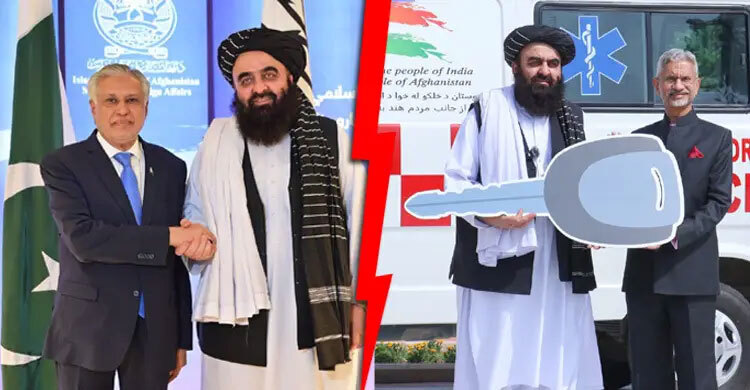
Afghanistan’s growing tilt toward India has become one of South Asia’s most striking geopolitical shifts and a major headache for Pakistan.
Barely four years after the Taliban’s 2021 return to power, which many in Islamabad hailed as a “strategic victory”, relations between the two neighbours have sharply deteriorated. Today, Kabul appears to be edging away from its long-time patron and exploring a warmer partnership with New Delhi, a move that could redefine the regional balance of power.
From Pakistan’s ‘proxy’ to India’s potential partner
Pakistan’s influence over Afghanistan has deep historical roots. Since the Soviet invasion of 1979, Islamabad has backed Afghan factions, most notably the Taliban, using them as a tool to secure “strategic depth” against India. Even after the US-led intervention in 2001, Pakistan continued to shelter Taliban elements, ensuring leverage over Kabul.
India, meanwhile, took a different path. Between 2001 and 2021, it invested more than 3 billion dollars in Afghan development, building the Salma Dam, highways, hospitals, schools and the new parliament building in Kabul. When the Taliban regained control in 2021, India adopted a cautious stance, closing its embassy but maintaining humanitarian aid.
By 2022, that caution began to thaw. India reopened a limited diplomatic presence and resumed direct engagement. During Afghan Foreign Minister Amir Khan Muttqi’s visit to New Delhi this week, India pledged new humanitarian support and promised to assist Afghan refugees, signalling that the relationship is entering a new, more pragmatic phase.
Border clashes and broken trust
The cracks between Pakistan and Afghanistan are widening, largely along the Durand Line, their disputed border. Since late 2024, clashes have become frequent, with both sides trading accusations. Pakistan blames the Taliban for sheltering Tehreek-e-Taliban Pakistan (TTP) militants who launch cross-border attacks. The Taliban deny this, accusing Pakistan of repeated airstrikes inside Afghan territory.
The tension boiled over on October 11, when fierce fighting erupted along the frontier. Kabul alleged that a Pakistani airstrike struck near the capital, a claim Islamabad has neither confirmed nor denied. Afghanistan’s Defence Ministry claimed 58 Pakistani soldiers were killed, while Pakistan’s military, in turn, reported over 200 “India-backed TTP fighters” eliminated.
Such exchanges have deeply eroded trust. The Taliban’s Defence Ministry issued a blunt warning that any further violation of Afghan sovereignty would be met with a “strong response”.
The TTP question: Root of the rift
At the core of this fallout lies the TTP issue. The group shares ideological roots with the Afghan Taliban but targets the Pakistani state. Islamabad insists Kabul is giving the TTP sanctuary, while the Taliban counter that the group’s presence is a consequence of Pakistan’s domestic turmoil and heavy-handed policies.
This mutual blame game has transformed what was once a close partnership into a cold rivalry. The Taliban now appear determined to assert an independent foreign policy, one that no longer bends to Pakistan’s security interests.
India steps in
As relations with Islamabad sour, New Delhi has seized the moment. Despite never formally recognising the Taliban government, India has maintained contact through aid, education and infrastructure initiatives. Talks held recently in Kabul covered cooperation in trade, education and connectivity, with Taliban officials calling India a “trusted regional partner”.
India’s strategy is clear: project soft power, avoid entanglement and counter Pakistani influence through long-term goodwill. National Security Adviser Ajit Doval articulated this philosophy long before taking office, arguing that India’s popularity in Afghanistan was its greatest strength and that extremist networks could be countered not only with arms but through ideas, education and economic empowerment.
Doval also noted that engaging India’s Deobandi scholars, who share roots with the Taliban’s religious leadership, would be key to reshaping future ties. Now, as the region realigns, many of his ideas appear to be unfolding in real time. It was also reflected during Afghan foreign minister’s visit to Darul Uloom Deoband, where he was accorded a grand reception.
Economic realignment: Bypassing Pakistan
Trade is also driving the shift. For years, Afghanistan relied heavily on Pakistani routes for access to the sea, a dependency that has often been weaponised through tariffs and border closures. Frustrated, Kabul is now pivoting toward Iran’s Chabahar Port, co-developed by India.
Chabahar offers Afghanistan direct access to global markets while bypassing Pakistan entirely. It could transform India–Afghanistan trade and attract new Indian investments, offering a vital economic lifeline for Afghanistan’s struggling economy.
A new regional equation
Afghanistan’s pivot toward India represents more than a diplomatic adjustment; it is a reordering of South Asia’s power map. For Pakistan, the loss of influence in Kabul is a strategic setback. For India, it is a rare opportunity to expand its reach in a historically contested zone.
For the Taliban, this tilt may simply be pragmatic, a bid to secure economic relief, political legitimacy and diplomatic flexibility in a polarised neighbourhood.
Whether this new alignment lasts will depend on how deftly each side balances ideology with realpolitik. What is certain is that Afghanistan’s long dance between Islamabad and New Delhi has entered an entirely new rhythm, and this time, the tune seems to be playing in India’s favour.